
168.1.178 Network Configuration Guide
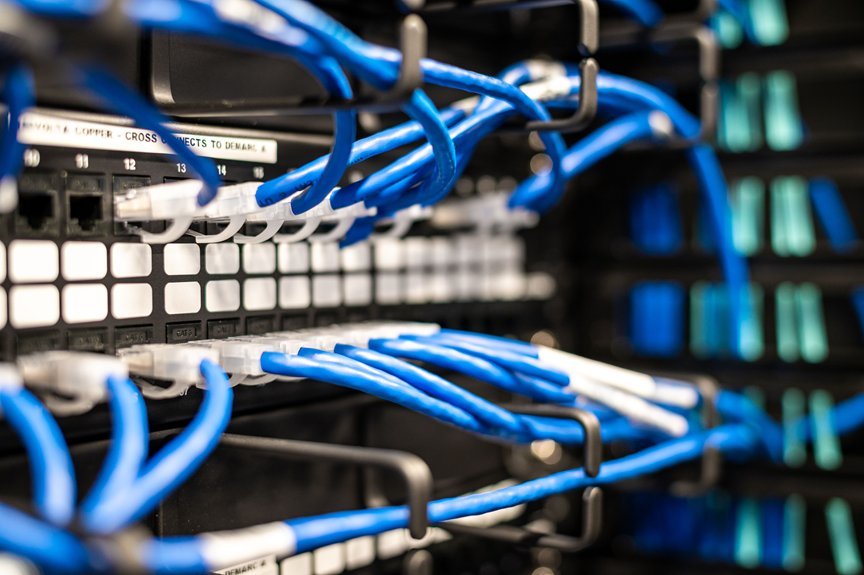
The 168.1.178 Network Configuration Guide presents a disciplined approach to building a scalable foundation. It outlines a consistent IP scheme aligned with departmental needs, and repeatable router and switch configurations. Security is emphasized through disciplined credential management, firmware cadences, and network segmentation. The guide also covers structured troubleshooting and auditable remediation steps. The framework demands meticulous documentation and change control, inviting practitioners to consider the implications before proceeding to the next phase. Further detail awaits.
Choose Your 168.1.178 Network IP Scheme
When selecting a 168.1.178 network IP scheme, the objective is to establish a consistent addressing plan that supports scalable growth and straightforward administration.
The discussion centers on network planning and IP addressing as core foundations.
Criteria: subnet boundaries aligned with department needs, future expansion, minimal waste, and clear documentation.
Result: a disciplined scheme enabling predictable routing and efficient resource allocation.
Set Up Routers and Switches for Robust Access
A robust access layer begins with concrete, repeatable configurations for routers and switches that align with the established 168.1.178 addressing plan. The guidance emphasizes disciplined blueprint planning and deliberate hardware procurement, ensuring interfaces, VLANs, and routing protocols are consistently deployed.
Configurations prioritize deterministic behavior, documented change control, and repeatable testing to support scalable, resilient access without compromising operational freedom.
Strengthen Security With Passwords and Firmware Updates
Strengthening security begins with disciplined credential management and timely firmware updates to protect network devices from exploitation.
This section outlines rigorous password hygiene practices, a defined firmware cadence, and deliberate network segmentation to minimize exposure.
Ongoing threat monitoring identifies anomalies, enabling rapid response.
Implementations emphasize consistent authentication, verifiable firmware integrity, and disciplined change control for resilient, freedom-preserving network operations.
Troubleshoot Common 168.1.178 Connectivity Issues
Effective troubleshooting of 168.1.178 connectivity issues requires a structured approach that isolates faults across hardware, software, and configuration layers.
The analysis proceeds with targeted network auditing, verifying device LEDs, port states, and IP schemas, then tests wireless links for signal strength and contention.
Identify wireless interference sources, implement channel adjustments, and document changes to preserve deterministic, auditable remediation paths.
Frequently Asked Questions
How to Recover a Forgotten 168.1.178 Admin Password?
The forgotten password cannot be recovered directly; a formal recovery procedure is required, involving administrator contact and security verification. VLAN support, QoS configuration, DHCP lease optimization, backup power strategy, and documented steps ensure secure reset and access restoration.
Can I Use VLANS With 168.1.178 Addressing?
VLANS compatibility exists with 168.1.178 addressing, enabling subnet segmentation. The system supports logical segmentation, preserving broadcast boundaries while maintaining routable connectivity; careful planning ensures security, performance, and freedom of traffic isolation across diverse networks.
What Are Best Practices for DHCP Lease Times?
DHCP lease times should balance client mobility and network stability. For flexible environments, use short leases (8–24 hours) on dynamic segments and longer leases (3–7 days) where devices stabilize. This supports network segmentation while maintaining administrator control.
How to Configure Qos on 168.1.178 Devices?
Streaming bandwidth like a metronome, the device implements QoS by defining priorities and queues. Qos configuration pitfalls are avoided with careful policy, traffic shaping strategies enforced, pacing flows, and consistent monitoring for predictable, freedom-enabled network performance.
Is There a Recommended Backup Power Strategy for Outages?
A recommended backup power strategy involves robust outage planning, incorporating uninterrupted power supplies, and defined redundancy planning; systems enable remote monitoring to verify status, ensuring continuous operation and rapid restoration during outages through orderly, disciplined implementation.
Conclusion
The 168.1.178 network configuration guide closes with a precise, methodical affirmation that a disciplined, repeatable process yields predictable outcomes. By harmonizing IP schemes, robust device configurations, and strict security practices, operations become traceable and scalable. Ongoing audits and controlled firmware cadences reinforce resilience. In this system, change is a carefully measured pulse, never an erratic storm—like a well-tuned machine whose gears mesh smoothly, ensuring reliable connectivity and auditable, continual improvement.