
How to Create Game Levels From Scratch
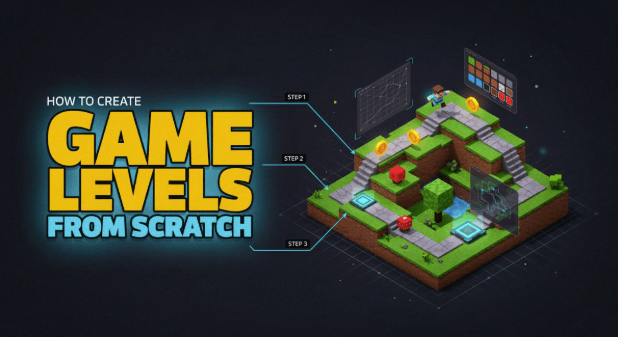
Making game levels from scratch may sound intimidating, but that’s only part of why it’s actually feasible for regular people now, thanks to technology and beginner-friendly tools. If you are going to make a game, you need to have some idea of what you’re doing and what you want to do, and be ready to learn as you go. Character and level design in video games are subsets of game design, which is influenced by game mechanics and rules, story and plot, and game technology prior to the finished product.
Developing games was once the domain of professional programmers, but now readily available game creation tools allow students, hobbyists, and beginners to make games. There are a huge number of people who want to make games because gaming is one of the biggest entertainment industries in the world. Meanwhile, beginners are scared shitless, thinking that making games requires them to be expert coders with millions of dollars’ worth of software at their feet!
A bit of time and imagination, a game idea such as Astrocade, no matter how simple it is, can turn into a digital game you can actually play. The latest technological breakthroughs offer better, more rapid access to knowledge for emerging developers. What’s driving the game development boom is also the rise of AI-driven platforms and easy-to-use software.
Planning Game Ideas
The first thing you need to do when drawing is to plan your game idea well. All brilliant games start with simple concepts that constantly evolve during development. Know Which Kind Of Game YOU Are Making Before You Make It. There are a lot of awesome game types, like action, puzzle, racing, adventure, and simulation games.
A clear vision will clarify everything you do throughout the development process. The planning stage involves creating a story and gameplay objectives. Efficient planning leads to fewer errors in development and less wasted time. A well-prepared approach paves the way for developing a good, fun game.
Choosing Development Tools
Game engines offer a host of features, including graphics design, animations, physics systems, and even sound integration. These can streamline game development for developers. Some platforms already include ready-made templates and AI assistance that make development even easier. Free game engines are particularly valuable for students and novices, as they help ease financial burdens while they learn.
Developers can upgrade to more advanced software as their skills grow over time. You’re more knowledgeable if you stick to one game engine rather than jumping from tool to tool. The right development tools can make game creation a smooth, efficient, and fun experience for the amateur developer as well.
Designing Game Characters
Game characters are vital to the success of any game. Players end up forming emotional attachments to characters because they are the story, gameplay, and experience all rolled into one. A good character design can make a game go from boring to fun. The developers need the ability to alter the characters’ appearance and personality, their movement, and their abilities.
Thanks to modern software and AI systems, creating characters is much easier for novices. AI-powered platforms. Users can now create character models, clothing, hairstyles, and even animations using AI. These save a lot of time and make good, professional-looking characters, even if you are not an artist or don’t have some of these other skills.
Building Game Levels
Game levels are the basis for interactions between players and game developers around mission completion, challenges, fun, and playtime. Fun was paramount when I was doing these levels, and the fun levels can wait a while before being polished. The intention is to provide an ever more fluid player experience that makes them want to keep playing.
Developers use color, lighting, texture, and sound effects to create a mood for each stage level. They can traverse forests, futuristic cities, castles, and deserts , to name a few that evoke a wide range of emotions in players.
Learning Game Marketing
Developing a game is just half the battle, since creators also want people to play their work. Through social media, trailers, videos, websites, and online communities, marketing informs you about the available games. Content producers and gaming influencers could also promote games through reviews and gameplay videos.
Proper marketing increases visibility and sales potential. Strong marketing campaigns enable developers to enhance their reputation and put their games in front of more players worldwide. Well-crafted levels help a player be more successful overall, and, as such, they can hold a player’s hand a little longer while still keeping the core gameplay intact.
See also: 168.0104 Router Network Setup Guide
Conclusion
Modern tools and easy-to-use software, a series of tutorials step by step, making the game from scratch that even beginners can follow. When you’re making a great game, every step of the production process, from brainstorming rough concepts on paper to playtesting, is vital to the final product. You don’t have to be a coding wiz anymore to start dabbling in game dev.
If you have the right amount of patience, imagination, and practice, you can even make a real game with your idea. Games like Minecraft Cut Crop and Make House Village have become easier to understand and make, and so has modern technology, making it easier for creators the world over to develop games. If your ambition is to create games as a hobby, to educate, or for a living, then the top-down approach to design outlined throughout this book will  help you create games and fulfill your creative expectations.
FAQ,s
How do novices make a game from nothing?
Amateurs can start with a simple game concept and use beginner-friendly game development tools. Step-by-step learning and regular practice can help develop my skills.
What software do I need to create a game?
Game engines, 3D graphics suites, and sound editing suites are examples of software suites that can be applied in the video game development industry. You’ll find some free options out there for beginners.
Is it possible to make a game without learning to code?
Yes, there are drag-and-drop mechanics and AI on most platforms nowadays. These products allow users to build games without needing to know how to code.
For how long are we allowed to develop a game?
It depends on how big the game is and how quickly you want it. A small casual game could be designed in a matter of weeks, whereas a massive undertaking could take months or years.
For what reasons are games tested?
Testing allows developers to identify bugs, gameplay balance issues, or performance issues that can be smoothed out. When a game is thoroughly tested, it allows for better play.